


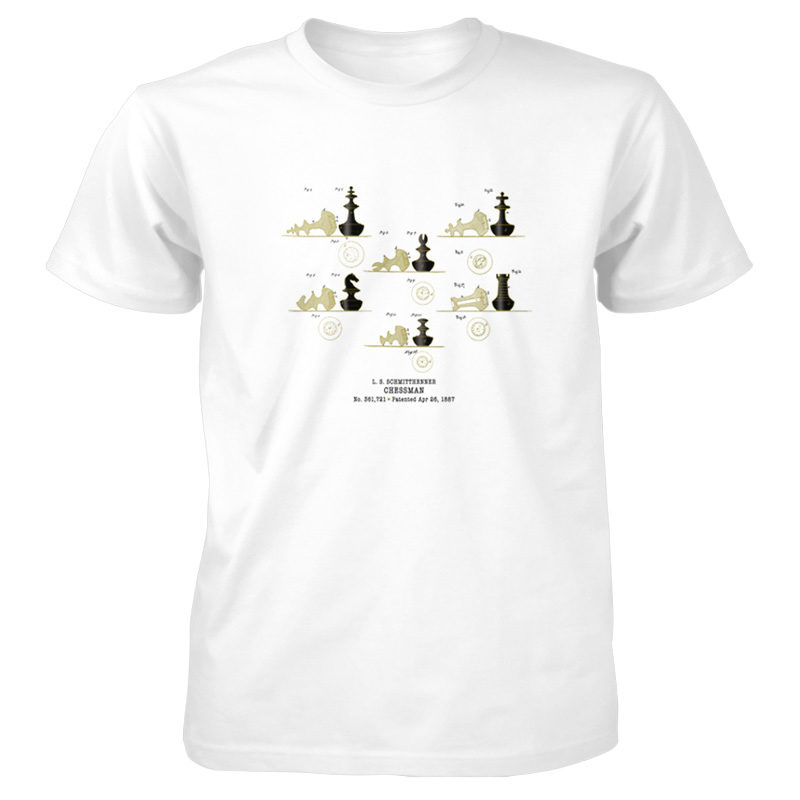


Chessman Patent T-Shirt
$28.00
Our original PatentWear Chessman design is printed in full color on a classic pre-shrunk 100% cotton men’s/unisex t-shirt using an eco-friendly water-based ink process, in shirt colors as indicated. The large design is printed on the front only. Some element colors in the design change slightly depending upon whether it is printed on a dark or light shirt.
Any foray into any history of the game of chess will take you on a global journey, beginning in the Far East, traveling through the Middle East and North Africa, and finally arriving in Europe. Although there are many aspects to the game’s development, its many iterations and variations are most evident when studying the evolution of its pieces.
Although the game began as a representation of the battlefield, the pieces have changed significantly through the centuries, depending upon the region and culture represented. In any case, the pieces reflect prominent characters in a particular society, such as military, political, or cultural figures, at the time the game was introduced to it. When chess gained popularity in Europe, the pieces became stand-ins for a royal court instead of an army. The original chessman, known as counselor, infantry, cavalry, elephants, and chariots became the queen, pawn, knight, bishop, and rook.
With origins generally believed to be in India, the game was first modeled on that country’s army, with each piece representing a division of the military. Pawns were the front line infantry, often sacrificed for a bigger picture, and when Europeans later acquired the game, the pawn remained unchanged since their view of the hierarchy was the same.
The knight represents the cavalry, and its distinctive move has remained unchanged from the beginning as it feints and dodges the enemy in a less linear way. The bishop began with more limited power as a symbol of India’s army elephants, but when chess arrived in Europe, the piece not only became more powerful, but changed to something more relatable (and influential) to European culture in the Middle Ages: the church.
Some historians believe the game might have originated in Persia (or even China) instead of India. The piece called “rook” is taken from a Persian word, rukh, which means chariot. Since the Persian chariot looked like a small movable castle with actual stonework, the Europeans interpreted the piece as a tower or castle of some sort. In Italian, the word for fortress is rocca, which sounded much like the Persian rukh, and thus, the piece became a castle, and the Anglicized version of the name, rook, remains today.
The most evolutionary piece through the centuries is the queen. She began as a mere advisor to the king, weak, and only able to move one square diagonally at a time. When chess came to Europe, the piece was changed to a queen—nearly every country had one at the time. Due to the considerable influence of Spain’s Queen Isabella in 1475, the piece became significantly more empowered, and its prior limits were altered to what we have today: unlimited range of moves on both diagonals, and ranks and files, resulting in a piece that is the most powerful on the board.
Meanwhile, the king has always been the king, and its movement has not changed from the beginning of the game, though, in some variants, the king is a general instead. Europeans introduced various rules to speed up the agonizingly slow game (as it initially came to them), including castling, a special move also involving the rook that gets the king to a safer place.
By the 1800s, chess clubs and competitions began to appear worldwide, and having a standardized set of pieces became necessary so that players from different cultures could compete without confusion. In 1849, the Staunton chess set was introduced for this purpose, and although there are seemingly infinite varieties of chess pieces available, the Staunton set is the one that comes to mind today when one thinks of iconic chess pieces. It was designed by architect Nathan Cook, who was influenced by London’s Neoclassical architecture, popular at the time because of the rediscovery of Pompeii in the 1700s. Howard Staunton, a chess authority considered one of the world’s best players, lent his name to Cook’s design, which was actively promoted to the public. The Staunton design helped to further popularize the game, and thus became the world standard.
The PatentWear Chessman design comes from a patent issued to Ludwig Schmitthenner in 1887 for a “new and improved” version of chessmen. The pieces are weighted and oval-shaped in such a way that if dropped, they will not roll away but instead, right themselves. The base of each piece is sized relatively according to the piece’s power: the larger the base, the higher the piece’s value. The precision, streamlining, and thoughtfulness of the original Staunton set is reflected in the elegant lines of Schmitthenner’s patented design as well.
Sizing | Fit | Care: Unisex T-Shirt
- 100% cotton (except Sport Grey=10% polyester)
- 5–5.3 oz. fabric weight
- Pre-shrunk jersey knit
- Taped neck and shoulders
- Tear-away tag
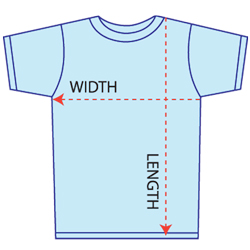
| USA/INCHES Sizes: Unisex/Men’s T-Shirt | ||||||
|---|---|---|---|---|---|---|
| 1″ = 2.54 cm | S | M | L | XL | 2XL | 3XL |
| Chest (inches) | 36 | 40 | 44 | 48 | 52 | 56 |
| Width (inches) | 18 | 20 | 22 | 24 | 26 | 28 |
| Length (inches) | 28 | 29 | 30 | 31 | 32 | 33 |
| CENTIMETERS Sizes: Unisex/Men’s T-Shirt | ||||||
|---|---|---|---|---|---|---|
| 2.54 cm = 1″ | S | M | L | XL | 2XL | 3XL |
| Chest (cm) | 96 | 102 | 112 | 122 | 132 | 142 |
| Width (cm) | 45.7 | 51 | 56 | 61 | 66 | 71 |
| Length (cm) | 74 | 76 | 78 | 79 | 81 | 83.8 |
CARE:
Machine wash, cold, inside out, gentle cycle with mild detergent and similar colors. Use non-chlorine bleach—only when necessary No fabric softeners.
Tumble dry, low heat, or hang-dry for longest life.
Cool iron inside-out if necessary. Do not iron decoration or print.
Do not dry clean.
Related products
-
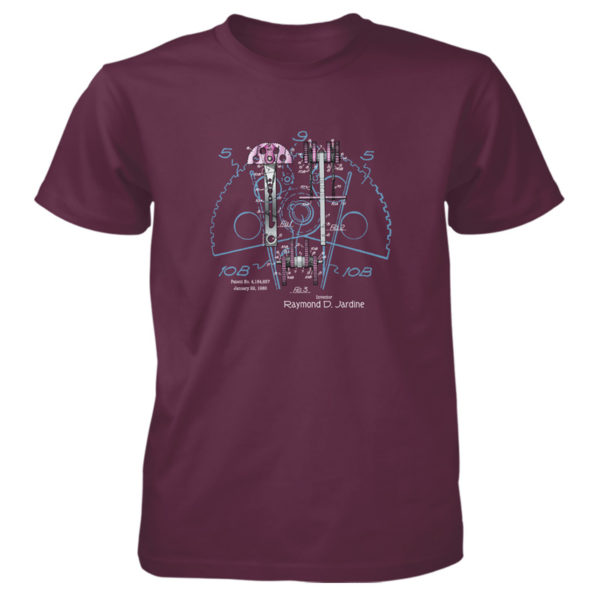
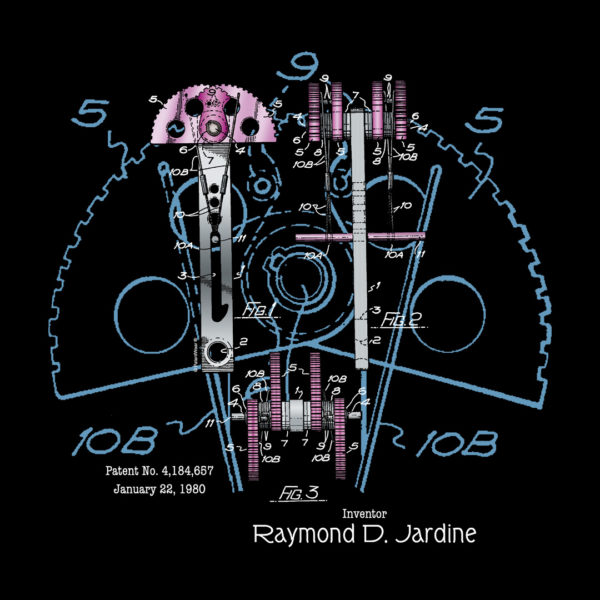
Jardine Cam Patent T-Shirt
$28.00Select options This product has multiple variants. The options may be chosen on the product page -


P-51 Mustang T-Shirt
$28.00Select options This product has multiple variants. The options may be chosen on the product page -
Bicycles MS|Lineart T-Shirt
$28.00Select options This product has multiple variants. The options may be chosen on the product page -

Hex Chock Patent T-Shirt
$28.00Select options This product has multiple variants. The options may be chosen on the product page