




Boxing Glove Patent Crewneck Sweatshirt
$34.00
See The Story of this design in tab, below.
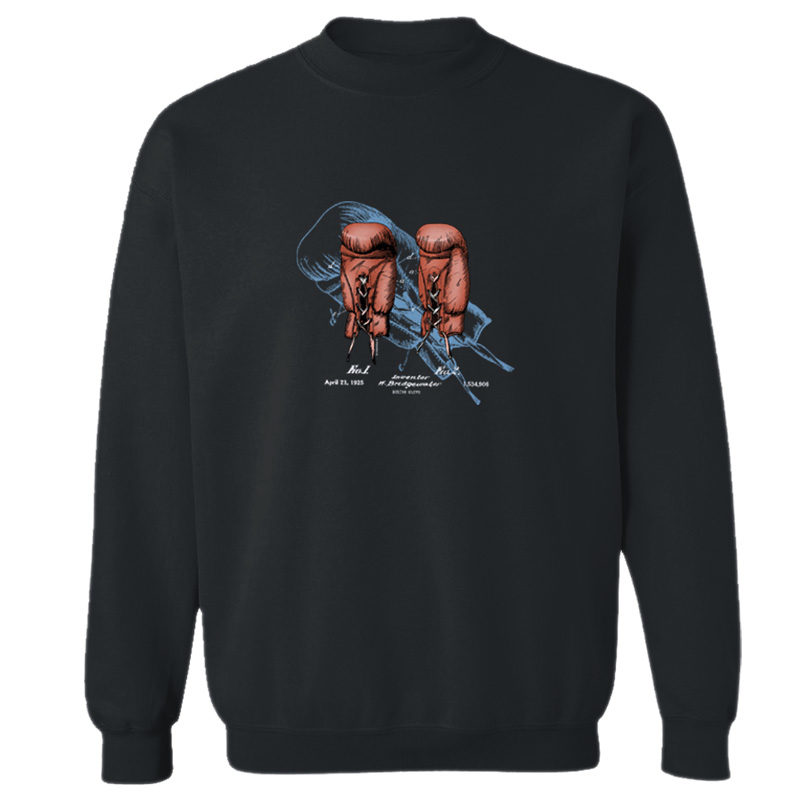
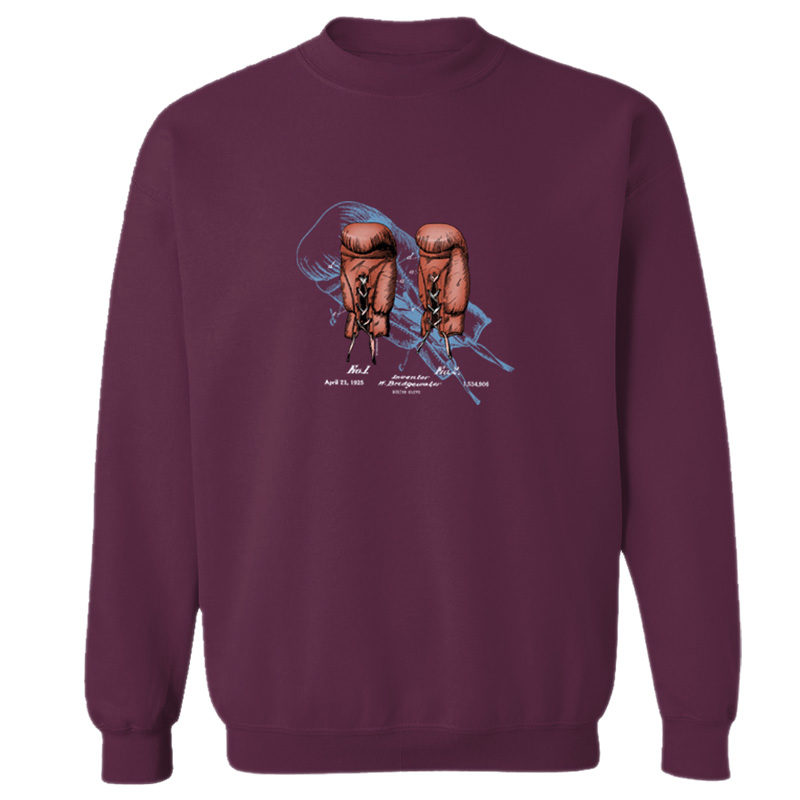
PatentWear’s original Boxing Glove design printed on 8 oz. crewneck sweatshirts. Made of a 50/50 blend of cotton and polyester air-jet spun yarn with a softer feel that also reduces pilling, this classic-fit sweatshirt features double-needle stitched collar, shoulders, armholes, cuffs and waistband, and 1×1 athletic rib knit with spandex for collar, cuffs, and waistband.
The Story
The sport of boxing was first introduced into the Olympics in 668 BC and for protection then, boxers wore only hardened leather straps on their hands and knuckles.
British fighter James Broughton introduced Broughton Rules in 1743—the first set of official boxing rules created to protect the fighter from injury. Broughton also introduced the first boxing glove but it was used primarily for sparring; the era of bare fists still prevailed. Through most of the early days of boxing, the fights were brutal and many fighters died in the ring. Due to this brutality, and the length of boxing matches (the longest fight ever recorded lasted 6.5 hours!), the Queensbury Rules of 1867 put limits on both the number of rounds and the time allowed for those rounds. Yet still, bare fists were allowed.
The first state to legalize boxing was New York, in 1896, and only then did boxing gloves became mandatory. The boxing glove finally took the edge off the brutality of the sport, and softened the spectacle. However, one of the main problems of the older boxing gloves, in which the thumb had a separate compartment from the fist, was serious injury to the thumb; eye injuries were also common.
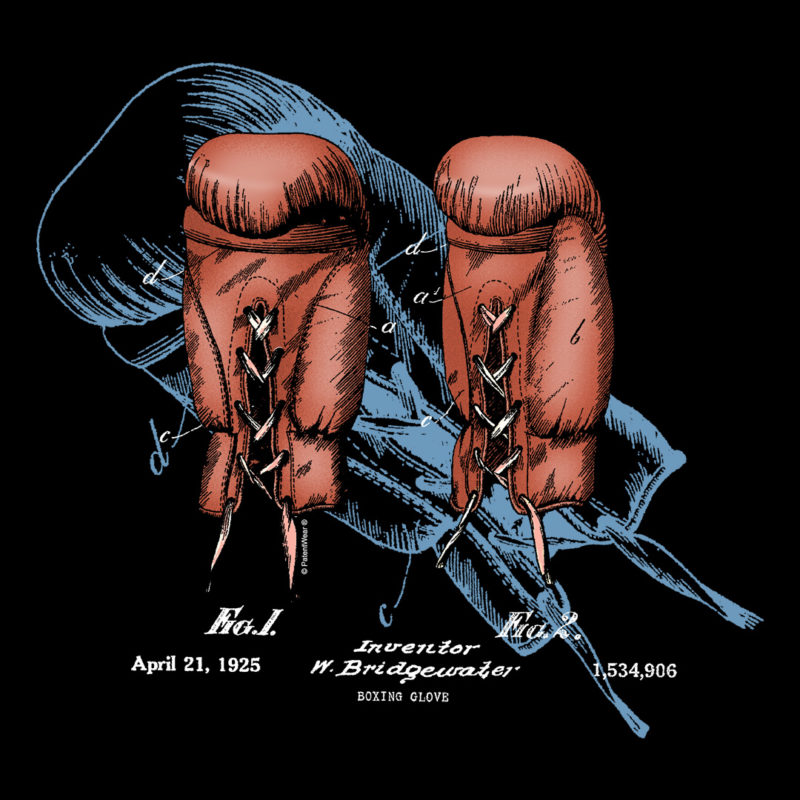
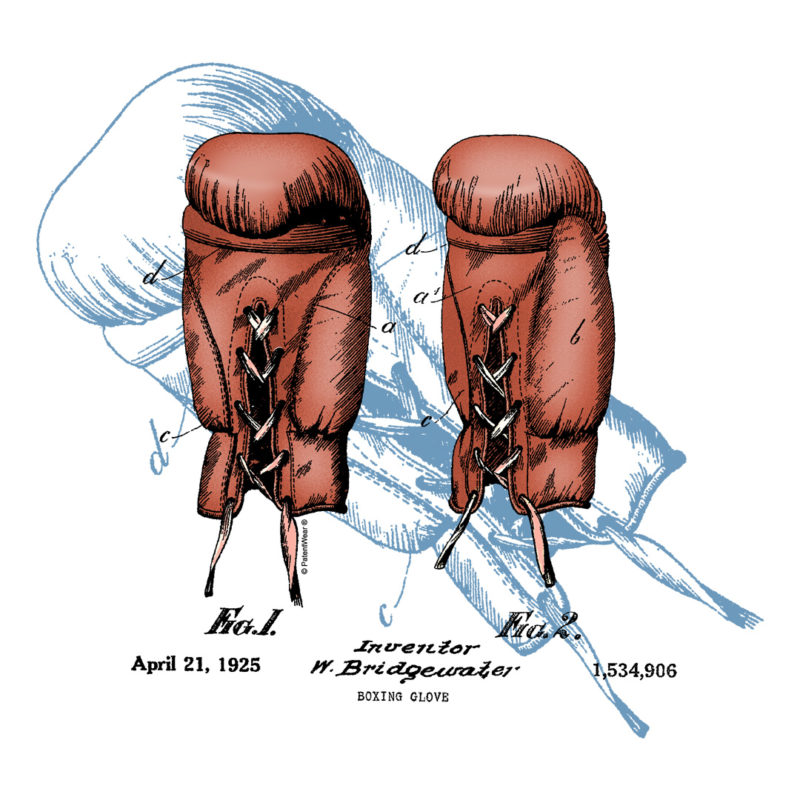
Mr. W. Bridgewater, in 1925, was light years ahead of the design game with his thumbless boxing glove patent (depicted in our PatentWear design) which took a mere sixty years to catch on. In 1982, New York became the first state to require thumbless boxing gloves in all professional and amateur boxing and sparring matches. Similar laws soon followed in every other state, requiring that the glove either be thumbless, or, have the thumb compartment attached to the body of the glove. Bridgewater’s glove design had finally arrived.
Sizing & Fit: Crewneck Sweatshirt
- 8.0 oz. fabric weight
- 50/50 cotton/polyester
- Reduced pilling and softer air-jet spun yarn
- 1×1 athletic rib knit collar, cuffs and waistband, with spandex
- Double-needle stitched collar, shoulders, armholes, cuffs and waistband

| USA Sizes: Unisex Crewneck Sweatshirt | |||||
|---|---|---|---|---|---|
| 1″ = 2.54 cm | S | M | L | XL | 2XL |
| Chest (inches) | 36 | 40 | 44 | 48 | 52 |
| Width (inches) | 20 | 22 | 24 | 26 | 28 |
| Length (inches) | 26 | 27 | 28 | 29 | 30 |
| METRIC Sizes: Unisex Crewneck Sweatshirt | |||||
|---|---|---|---|---|---|
| 2.54 cm = 1″ | S | M | L | XL | 2XL |
| Chest (cm) | 102 | 112 | 122 | 132 | 142 |
| Width (cm) | 51 | 56 | 61 | 66 | 71 |
| Length (cm) | 66 | 69 | 71 | 74 | 76 |
Related products
-


Golf MS|Color Crewneck Sweatshirt
$34.00Select options This product has multiple variants. The options may be chosen on the product page -
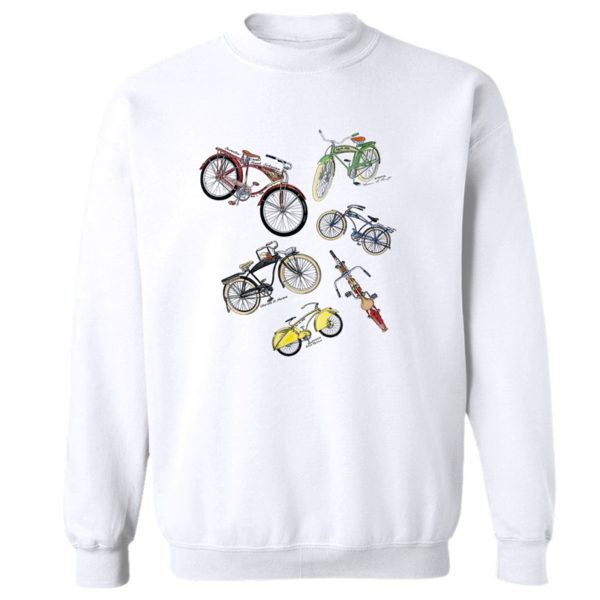
Bicycles MS|Color Crewneck Sweatshirt
$34.00Select options This product has multiple variants. The options may be chosen on the product page -

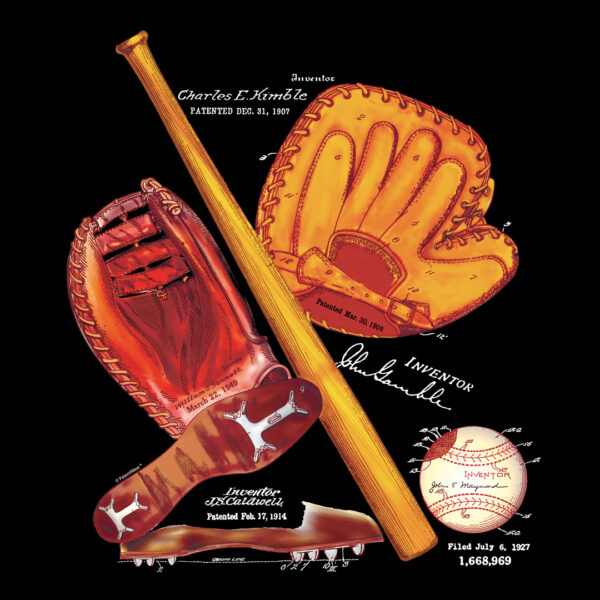
Baseball MS|Color Crewneck Sweatshirt
$34.00Select options This product has multiple variants. The options may be chosen on the product page -

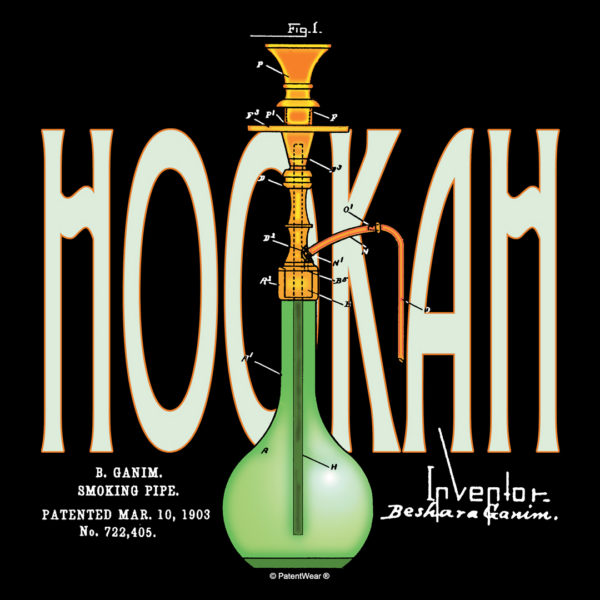
Hookah Patent Sweatshirt
$28.00Select options This product has multiple variants. The options may be chosen on the product page