


Jardine Cam Patent Women’s Racerback Tank
$24.00
See The Story of this design in tab, below.
Our Jardine Cam patent design on a women’s racerback tank that is soft, lightweight, and form-fitting with a flattering cut and raw edge seams for an edgy touch.
• 50% polyester/25% combed ring-spun cotton/25% rayon
• Fabric weight: 4.2 oz (142 g/m2)
• Raw edge seams
• Fabric is laundered to reduce shrinkage
• Fit type: Misses
The Story
[A note on cams in general: Non-climbers could live a lifetime without ever needing a cam device. For a climber, though, it is an essential piece of equipment used to protect against the consequences of a fall. Cams are a type of protection device placed on rocks as temporary, removable, non-defacing (and thus “clean”) anchors while climbing. Spring-loaded and controlled with a “trigger,” cams are designed to expand and grip the rock securely, thus protecting against a climber’s potential fall.]
Ray Jardine, with his 1978 patent, “Climbing Aids” (issued 1980), revolutionized the climbing world. An aeronautical engineer by training, he designed a spring-loaded opposing cam unit with a 14-degree camming angle and an innovative triggering mechanisim. It became Jardine’s patent, yes, but it was Greg Lowe who first conceived of the idea.
The Crack Jumar, invented by Greg Lowe in 1965 is considered the first attempt at a cam device for protection. Greg designed it to be used on the Stoveleg Cracks on El Cap (aka El Capitan, Yosemite, California) for an early, almost successful attempt on NIAD (the oft-used acronym for climbing the “nose in a day”). Later, in 1973 Greg designed and patented the spring-loaded Cam Nut which is considered the first practical use of the constant-angle camming concept.
The Russian climber Abalokov claimed to have invented the first cams, but in reality his “inventions” were the result of a meeting with Jeff Lowe on a climbing exchange in the Pamirs in 1974. Jeff introduced the Russian to his brother Greg’s early prototypes and explained in detail how they functioned. It was Abalokov’s first exposure to the camming idea!
Greg Lowe had been appropriately called Inventor Extraordinaire in a 1986 issue of Rock and Ice. Greg Lowe’s brilliance and his pioneering developmental work laid the groundwork and, was the inspiration for Ray Jardine to further develop the constant-angle camming concept into a highly marketable product. The unprecedentedly complicated active camming device had finally found curiosity and acceptance amongst the myriad climbers trying to leave no trace.
Building numerous prototypes in the 70s and testing them on such free ascents as Separate Reality (5.12), Rostrum (5.12) and the first 5.13 in the valley, Phoenix, Jardine knew he had a successful design. Jim Bridwell, major domo of Yosemite-climbers’ Camp 4 base during that era, felt that this was possibly the biggest technical breakthrough since the nylon rope.
For many years, Jardine kept his arsenal of new camming protoypes cloaked in secrecy in a blue bag so that few but a very select group of Camp 4 climbing partners could view them, let alone use them. One day, a climbing mate asked if he was going to bring his blue bag of goodies with him on the climb that day—his… ahh… “friends.” The name Jardine gave his patented commercial cam device? Why, Friends of course!
Sizing & Fit | Women’s Racerback Tank
Fit type: Misses. Primary brand: Next Level.
- 150% polyester, 25% combed ring-spun cotton, 25% rayon
- Fabric weight: 4.2 oz/yd² (142 g/m²)
- Fabric is laundered to reduce shrinkage
- Satin label
- Raw edge seams
Machine wash cold, inside-out, gentle cycle with mild detergent and similar colors. Use
non-chlorine bleach, only when necessary. No fabric softeners. Tumble dry low, or hang-dry for longest life. Cool iron inside-out if necessary. Do not dry clean.
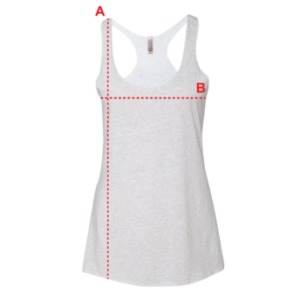
Find Your Size: If you’re unsure about sizing, an easy way to determine a correct size is to grab an existing favorite, lay it flat, and then measure it.
A LENGTH: Place the end of a tape measure beside the collar at the top of the tank top. (Highest point shoulder). Pull the tape measure to the bottome of the shirt.
B WIDTH: Place the end of the tape measure at the seam under the sleeve and pull it across the shirt to the seam under the opposite sleeve.
| USA Sizes: Women’s Racerback Tank Top |
|||||
|---|---|---|---|---|---|
| 1″ = 2.54 cm | XS | S | M | L | XL |
| Bust (inches) | 30 | 32 | 34 | 36 | 38 |
| Width (inches) | 15 ¼ | 16 ¼ | 17 ¼ | 18 ¼ | 19 ¼ |
| Length (inches) | 26 ⅛ | 26 ¾ | 27 ⅜ | 28 | 28 ⅝ |
| METRIC Sizes: Women’s Racerback Tank Top |
|||||
|---|---|---|---|---|---|
| 2.54 cm = 1″ | XS | S | M | L | XL |
| Bust (cm) | 76 | 82 | 96 | 92 | 98 |
| Width (cm) | 38.7 | 41.3 | 43.8 | 46.4 | 49 |
| Length (cm) | 66.4 | 68 | 69.5 | 71 | 72.7 |
Related products
-

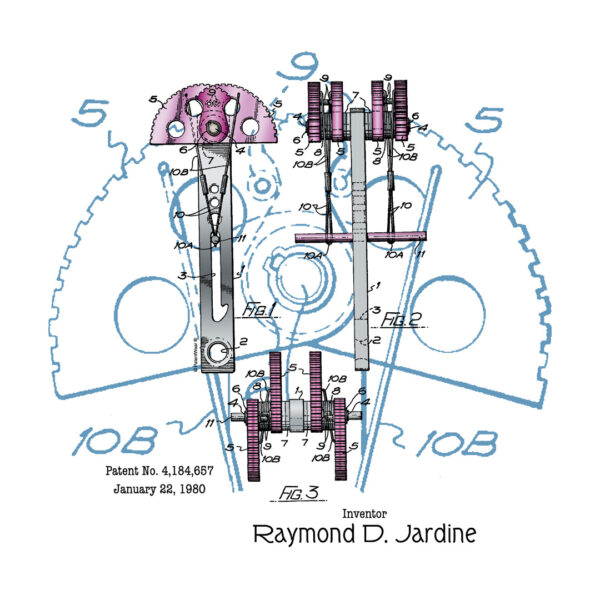
Jardine Cam Patent Mug
Price range: $12.00 through $14.00Select options This product has multiple variants. The options may be chosen on the product page -
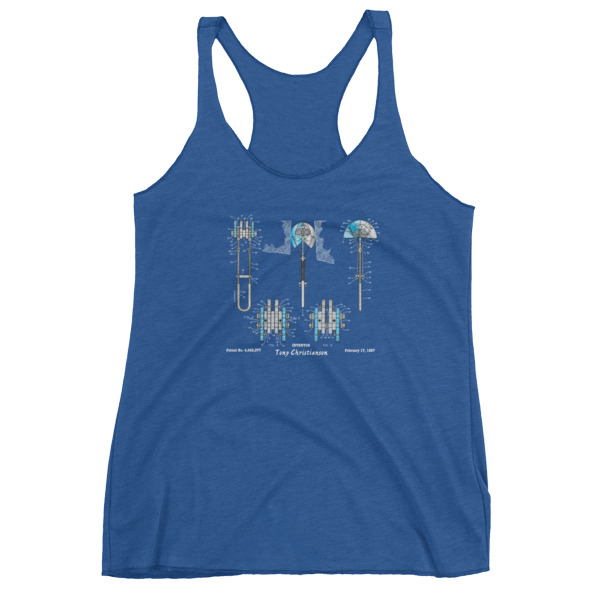
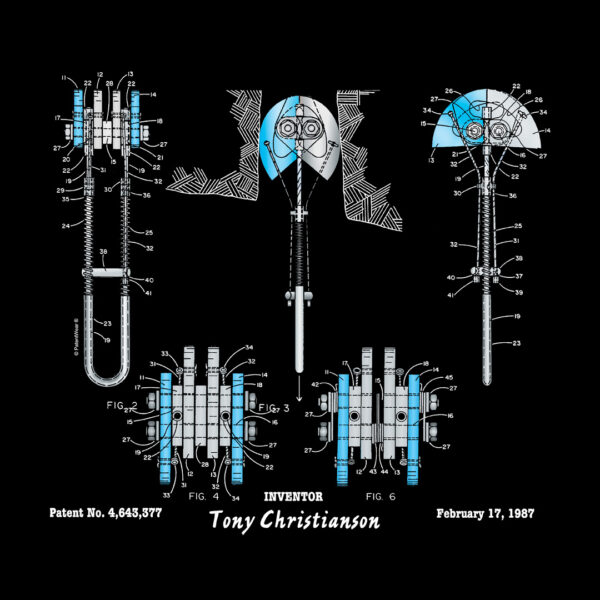
Christianson Cam Patent Women’s Racerback Tank
$24.00Select options This product has multiple variants. The options may be chosen on the product page -


Cannabis 507 Patent Women’s Racerback Tank
$24.00Select options This product has multiple variants. The options may be chosen on the product page -

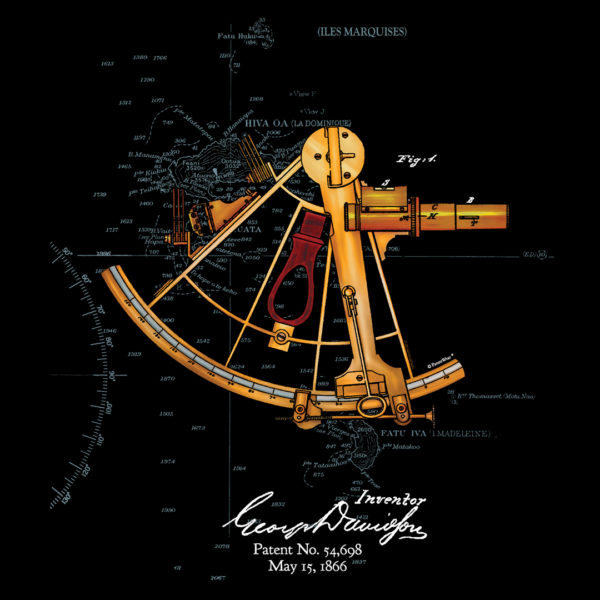
Sextant Patent Women’s Racerback Tank
$24.00Select options This product has multiple variants. The options may be chosen on the product page