


Hex Chock Patent T-Shirt
$28.00
See The Story of this design in tab, below.
PatentWear’s original Hex Chock design is printed in full color on a classic pre-shrunk 100% cotton men’s/unisex t-shirt using an eco-friendly water-based ink process, in shirt colors as indicated. The large design is printed on the front only. Some element colors in the design change slightly depending upon whether it is printed on a dark or light shirt.
The Story
For rock climbers, chocks are essential pieces of equipment used to protect against the consequences of a fall. They are a type of device placed into rock cracks as temporary, removable, non-defacing (and thus “clean”) protection while climbing.
The talented duo of Yvon Chouinard and Tom Frost together established some of the classic routes during the Golden Age of Yosemite climbing. Representative of their routes are: West Face of Sentinel, North Face of Quarter Dome, and, as members of the first ascent team, the North American Wall on El Capitan. As founders of Chouinard Equipment Company, Frost and Chouinard brought sophisticated new concepts to a wide range of traditional mountaineering equipment.
The Chouinard/Frost invention of the symmetric hexagonal nut in 1971 as an alternative to pitons was a pivotal point in the transition to clean and passive climbing. In a matter of just three years the Hex (short for the trade name Hexentric®, given to the Chouinard/Frost patent for “polygonal climbing chock” depicted in our PatentWear design) evolved to an exciting and at the time mind-bending asymmetrical pattern that could fit four distinct size ranges all in one device. With typical Frostonian wit, Tom refers to the asymmetrical Hexentric as the “eccentric Hexentric.”
Passive protection in climbing was not new, however. It had begun with the use of stones in cracks in North Wales in 1926 during an ascent of Piggot’s Climb on Clogwyn du’r Arddu. The British had a natural aversion to pitons from a purely ethical viewpoint, and generally frowned upon degrading a climb with either pitons or bolts. The main complement of British gear in the 60s consisted of stones, nuts and chocks with some well-known names like MOAC, Acorn, Spud and Cracker.
The concept of clean climbing was first introduced in Yosemite by Royal Robbins. In 1967, armed with a new set of chocks from Joe Brown in Llanberis, North Wales, he made the first ascent of Nutcracker, sans pitons. His famous 1967 Summit magazine article, “Nuts to You” set the stage for a new era of clean climbing. Tom Frost’s 1972 article, “Preserving the Cracks” further promoted the concept, and the influential Chouinard Equipment Catalog of 1972, featuring Doug Robinson’s magnificent “The Whole Natural Art of Protection,” forever set the philosophy of clean hammerless climbing in stone. It made a strong push for clean climbing in terms of free protection and relying less on pitons hammered in for protection. The combination of all these factors over a short period of about five years revolutionized climbing as it was previously known in the U.S., and perhaps, just in time. With the explosive growth in climbing—from a few thousand enthusiasts to millions in less than a decade—it is frightening to imagine what could have been lost forever with the continual use of destructive pitons by the coming hordes.
1973 was a vanguard year for clean climbing, with two seminal Yosemite ascents in particular. In July, Bruce Carson made a solo, hammerless ascent of the West Face of Sentinel, the first Grade VI to be climbed clean. In the fall, Galen Rowell, Doug Robinson and Dennis Hennek made a clean ascent of the NW Face of Half Dome. A follow-up article in National Geographic a year later—with a front cover photo of Hennek on the pitch above Thank God Ledge—was the catalyst for a whole new generation of climbers to forego pitons whenever possible, and climb clean.
Hex chocks were an important contribution in the transition from an iron era of climbing to one of passive nuts. It wasn’t easy to persuade old-school climbers to give up the use of pitons. The process was gradual, but a younger generation perhaps more open to new ideas was quick to adapt to the use of protection that was both easier and quicker to place and retrieve. More than four decades later the hexagonal design, now lighter and stronger than ever, is still widely popular with climbers today.
NOTE: Although Yvon Chouinard is also named in this patent, his attorney has requested that Chouinard’s signature as one of the inventors—usually included in PatentWear’s designs whenever possible just as they appear on the original patents granted—be eliminated from this design. Out of respect for this inventor, we have complied. Tom Frost, on the other hand, has given us his blessing.
Sizing | Fit | Care: Unisex T-Shirt
- 100% cotton (except Sport Grey=10% polyester)
- 5–5.3 oz. fabric weight
- Pre-shrunk jersey knit
- Taped neck and shoulders
- Tear-away tag
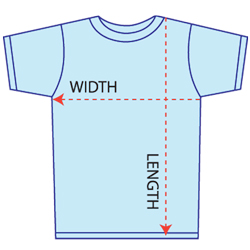
| USA/INCHES Sizes: Unisex/Men’s T-Shirt | ||||||
|---|---|---|---|---|---|---|
| 1″ = 2.54 cm | S | M | L | XL | 2XL | 3XL |
| Chest (inches) | 36 | 40 | 44 | 48 | 52 | 56 |
| Width (inches) | 18 | 20 | 22 | 24 | 26 | 28 |
| Length (inches) | 28 | 29 | 30 | 31 | 32 | 33 |
| CENTIMETERS Sizes: Unisex/Men’s T-Shirt | ||||||
|---|---|---|---|---|---|---|
| 2.54 cm = 1″ | S | M | L | XL | 2XL | 3XL |
| Chest (cm) | 96 | 102 | 112 | 122 | 132 | 142 |
| Width (cm) | 45.7 | 51 | 56 | 61 | 66 | 71 |
| Length (cm) | 74 | 76 | 78 | 79 | 81 | 83.8 |
CARE:
Machine wash, cold, inside out, gentle cycle with mild detergent and similar colors. Use non-chlorine bleach—only when necessary No fabric softeners.
Tumble dry, low heat, or hang-dry for longest life.
Cool iron inside-out if necessary. Do not iron decoration or print.
Do not dry clean.
Related products
-
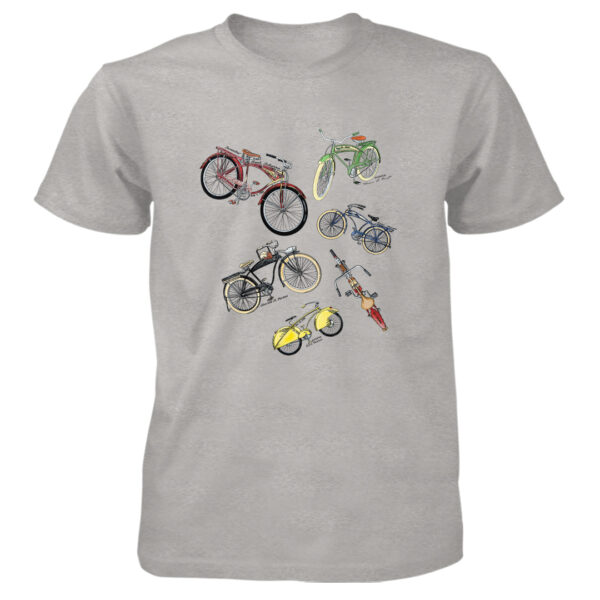

Bicycles MS|Color T-Shirt
$28.00Select options This product has multiple variants. The options may be chosen on the product page -
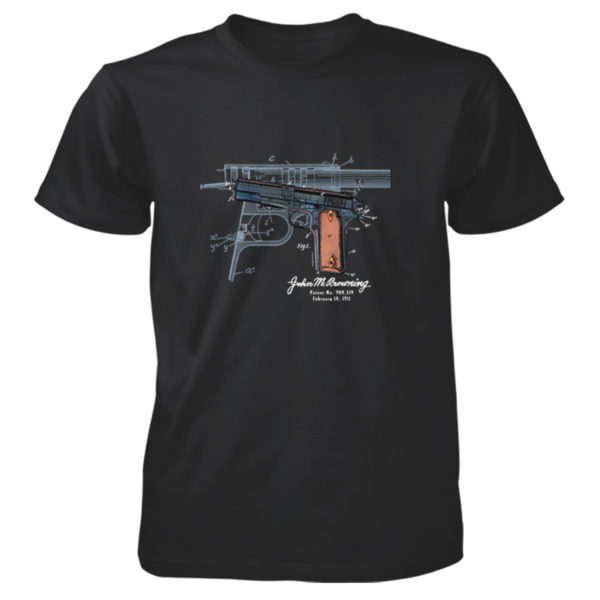
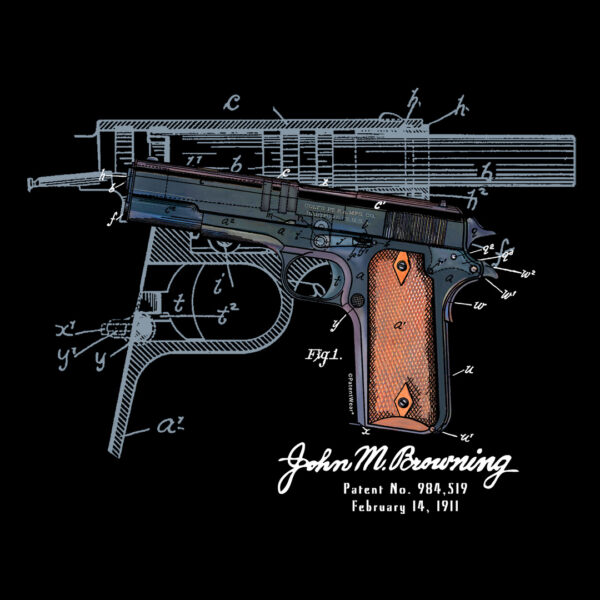
Browning Model 1911 Patent T-Shirt
$28.00Select options This product has multiple variants. The options may be chosen on the product page -

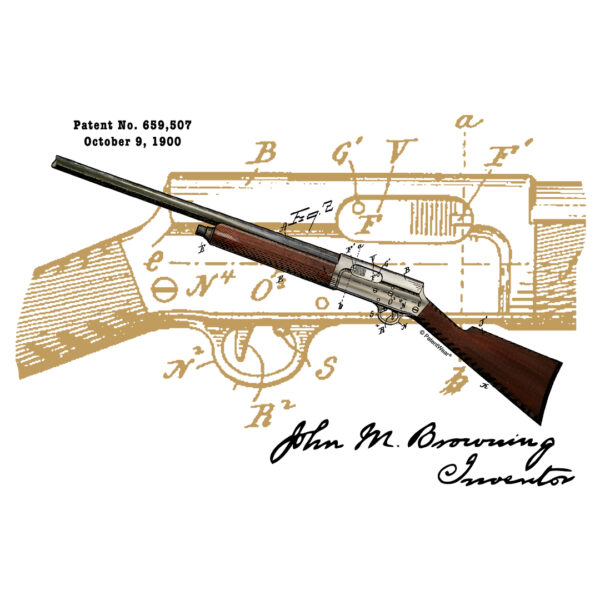
Browning Auto-5 Patent T-Shirt
$28.00Select options This product has multiple variants. The options may be chosen on the product page -
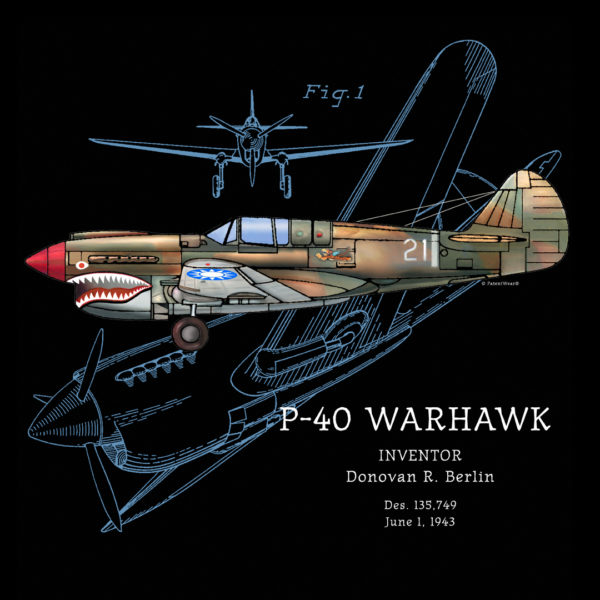
P-40 Warhawk Patent T-Shirt
$28.00Select options This product has multiple variants. The options may be chosen on the product page