



Water Can Patent Tote—Large
$20.00
See The Story of this design in tab, below.
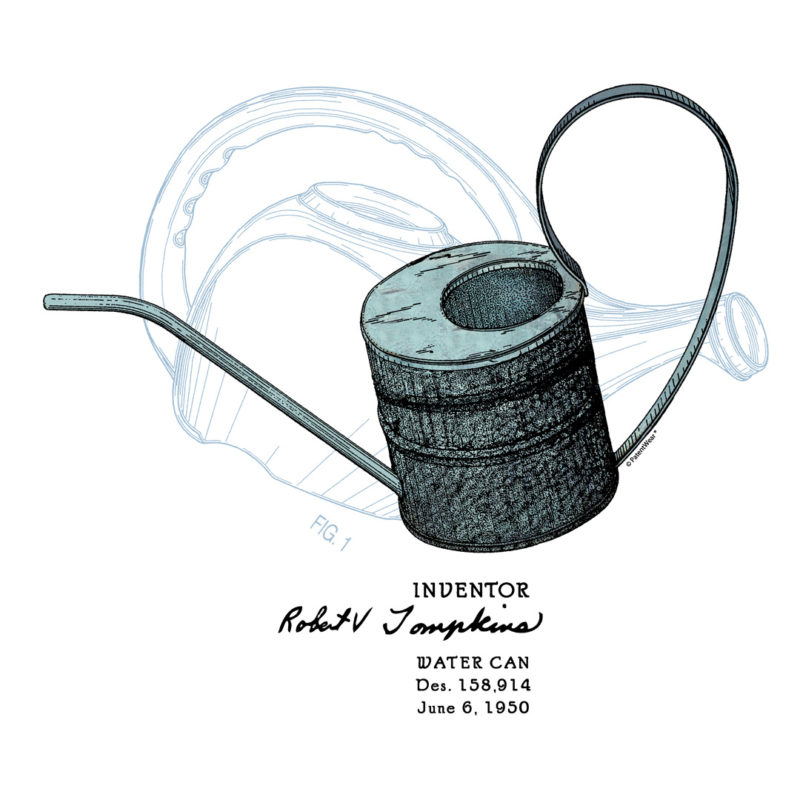
Combine eco-conscious comfort with your personal style—showcase your passion on this spacious 100% certified organic cotton twill tote bag. The sturdy fabric, dual straps, and flat bottom gives this tote plenty of room for a whole lot of groceries, toys, sports gear, games, books, and even a matching t-shirt to make a thoughtful combo gift for someone special. Available in oyster or black, with PatentWear’s original Water Can Patent design printed on one side.
• 100% certified organic cotton 3/1 twill
• Fabric weight: 8 oz/yd² (272 g/m²)
• Dimensions: 20″ x 14″ x 5″
• Capacity: 6 US gal (23 l)
• Weight limit: 30 lbs (13.6 kg)
• 1″ wide dual straps, 25″ long
• Open main compartment, flat bottom
• Easy care: hand or machine wash cold, inside-out, non-chlorine bleach only, no fabric softeners, tumble dry low or hang dry for longest life
The Story
The watering can is one of the most common tools you can find in the garden but few people give much thought to its origin. With a long history of usefulness, gardeners today enjoy them for both their functional and decorative appeal. Designs, colors and fabrication materials make them wonderful collector’s items, useful containers for flowers, or, purely decorative.
The name first made its debut in 1692 when Lord Timothy George of Cornwall, a cottage gardener, first wrote about “watering cans” in his diary. Before then, inefficient, sloppy, and unwieldly containers used to water plants in the garden were simply know as “watering pots.”
In 1886, John Haws of England created the basic watering can design that is still popular today. The design, later patented by Michael Deas, created perfectly balanced cans for carrying. The classic Haws long-reach metal outdoor watering can with a brass “rose” (a device like a cap with small holes) is one of the most beautiful tools ever created for a gardener. Yes, it was the instantly-recognizable classic—the traditional Haws tin-plated watering can— that featured as Peter Rabbit’s hiding place in Beatrix Potter’s classic The Tale of Peter Rabbit, first published in 1901.
The watering can was once described by John Cleese as: “a large, cylindrical, tin-plated vessel with a perforated pouring piece, much used by the lower classes for the purpose of artificially moistening the surface soil.” Whatever a gardener’s “class” may be, the simple act of hand-watering a garden from such a perfectly basic yet functional tool is often felt to be therapeutic in today’s hectic world.