


Boxing Glove Patent Tote Bag
$20.00
See The Story of this design in tab, below.
An eco-conscious, 100% certified organic cotton 8-oz. twill tote that is sturdy, roomy, and ideal for carrying groceries, toys, light tools, art supplies, music, workout, beach items, or even a matching t-shirt to make it a special gift! Available in oyster, with PatentWear’s original Boxing Glove Patent design printed on one side.
• Color: Oyster
• Dimensions: 16″ x 14.5″ x 5″
• 1″ wide dual straps, 24.5″ length
• Single open main compartment
• Easy care: hand or machine wash cold, inside-out, non-chlorine bleach only, no fabric softeners, tumble dry low or hang dry for longest life
The Story
The sport of boxing was first introduced into the Olympics in 668 BC and for protection then, boxers wore only hardened leather straps on their hands and knuckles.
British fighter James Broughton introduced Broughton Rules in 1743—the first set of official boxing rules created to protect the fighter from injury. Broughton also introduced the first boxing glove but it was used primarily for sparring; the era of bare fists still prevailed. Through most of the early days of boxing, the fights were brutal and many fighters died in the ring. Due to this brutality, and the length of boxing matches (the longest fight ever recorded lasted 6.5 hours!), the Queensbury Rules of 1867 put limits on both the number of rounds and the time allowed for those rounds. Yet still, bare fists were allowed.
The first state to legalize boxing was New York, in 1896, and only then did boxing gloves became mandatory. The boxing glove finally took the edge off the brutality of the sport, and softened the spectacle. However, one of the main problems of the older boxing gloves, in which the thumb had a separate compartment from the fist, was serious injury to the thumb; eye injuries were also common.
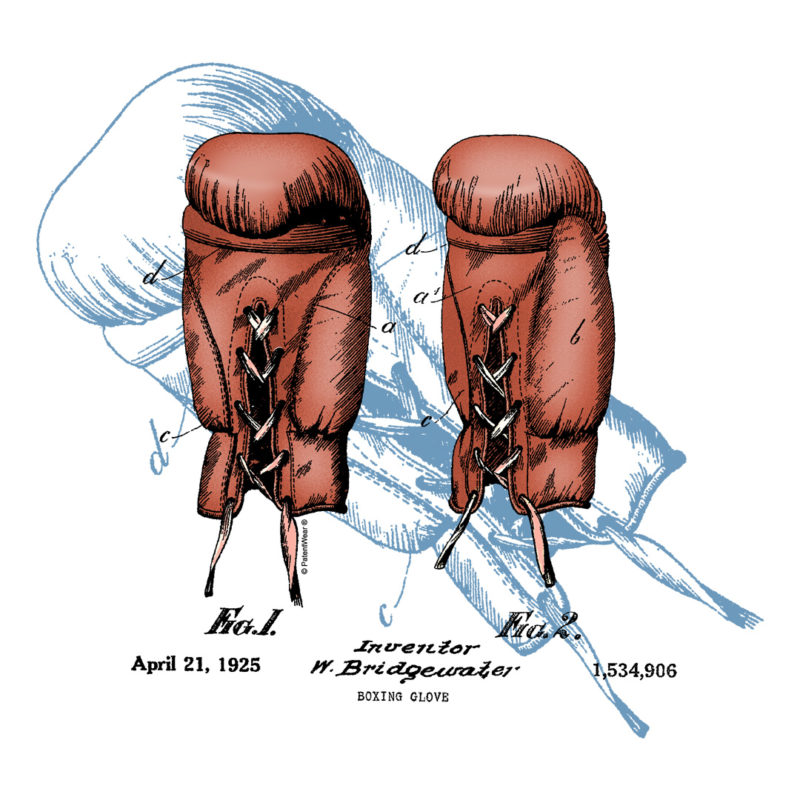
Mr. W. Bridgewater, in 1925, was light years ahead of the design game with his thumbless boxing glove patent (depicted in our PatentWear design) which took a mere sixty years to catch on. In 1982, New York became the first state to require thumbless boxing gloves in all professional and amateur boxing and sparring matches. Similar laws soon followed in every other state, requiring that the glove either be thumbless, or, have the thumb compartment attached to the body of the glove. Bridgewater’s glove design had finally arrived.
Sizing & Fit: Women’s T-Shirt
- 100% combed ring-spun cottont
- Fabric weight: 4.5 oz.
- Shoulder-to-shoulder taping
- Seamed collarette
- Double-needle stitched sleeves and bottom hem
- Tear-away label
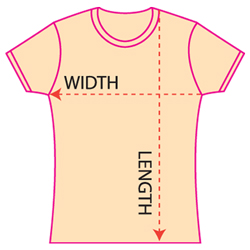
| USA Sizes: Women’s T-Shirt | |||||
|---|---|---|---|---|---|
| 1″ = 2.54 cm | S | M | L | XL | 2XL |
| Bust (inches) | 34.5 | 38.5 | 42.5 | 46.5 | 50.5 |
| Width (inches) | 17.25 | 19.25 | 21.25 | 23.25 | 25.25 |
| Height (inches) | 25.5 | 26 | 27 | 28 | 28.5 |
| METRIC Sizes: Women’s T-Shirt | |||||
|---|---|---|---|---|---|
| 2.54 cm = 1″ | S | M | L | XL | 2XL |
| Bust (cm) | 88 | 98 | 108 | 118 | 128 |
| Width (cm) | 44 | 49 | 54 | 59 | 64 |
| Height (cm) | 65 | 66 | 69 | 71 | 72 |