


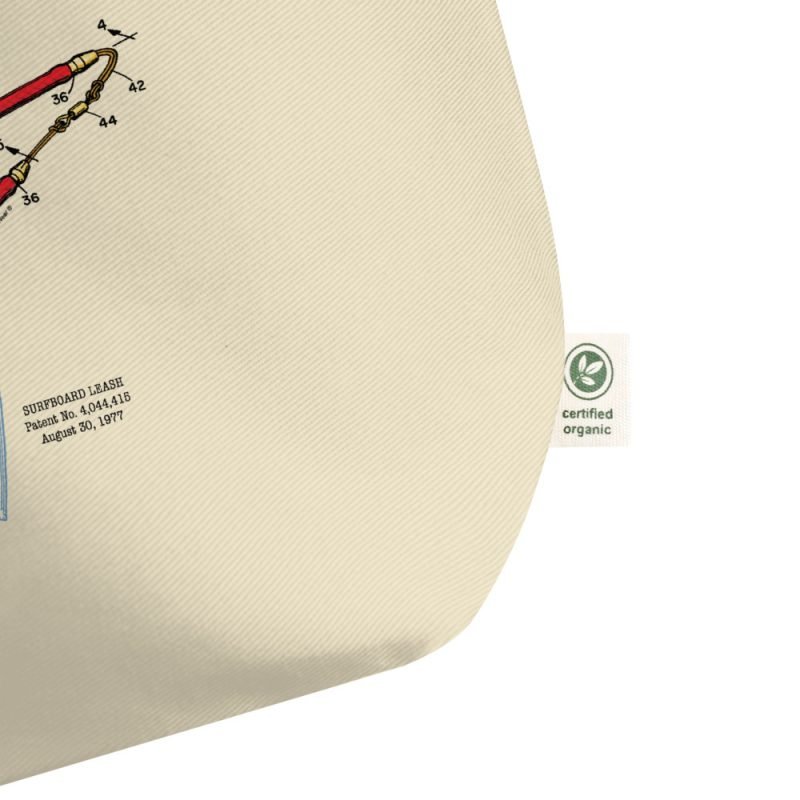

Leash Patent Tote—Large
$20.00
See The Story of this design in tab, below.
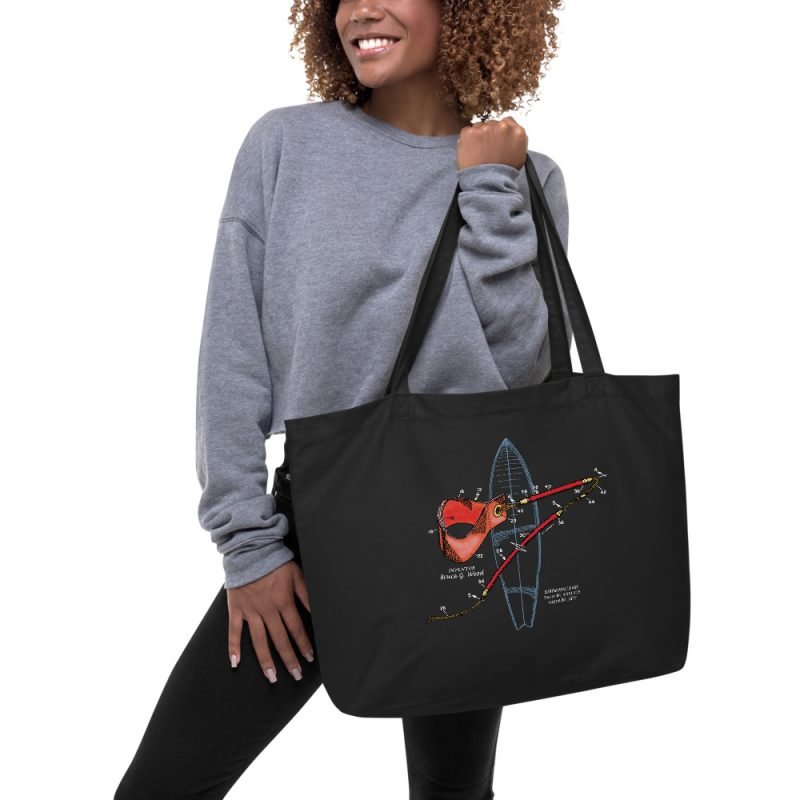
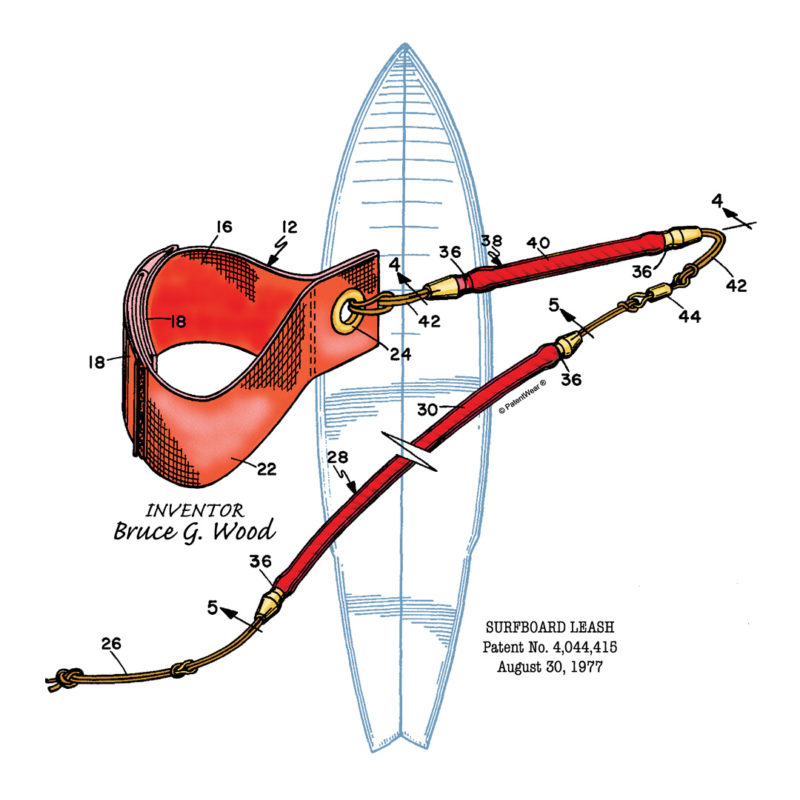
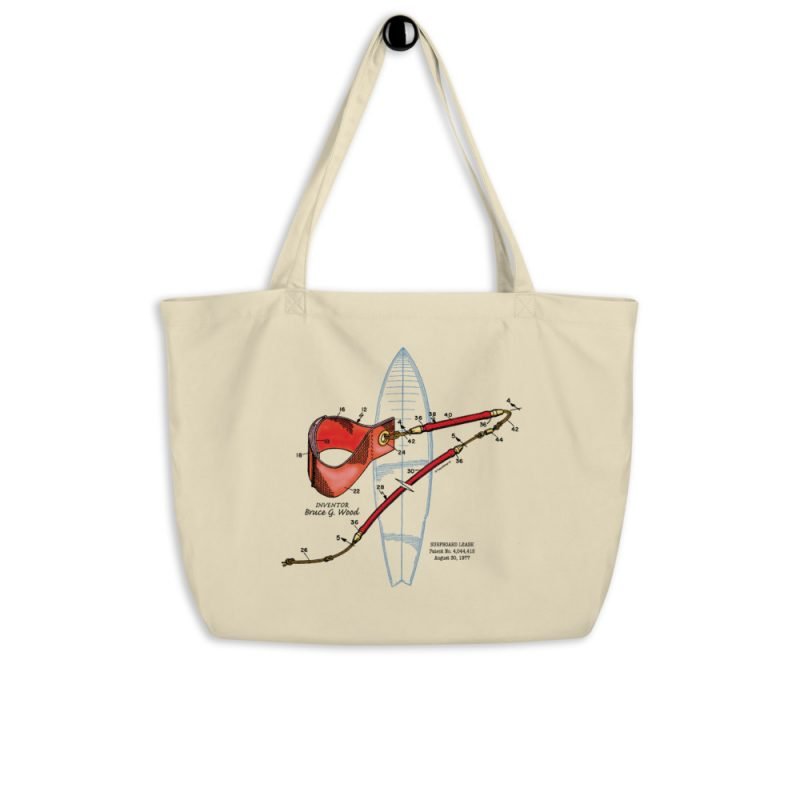
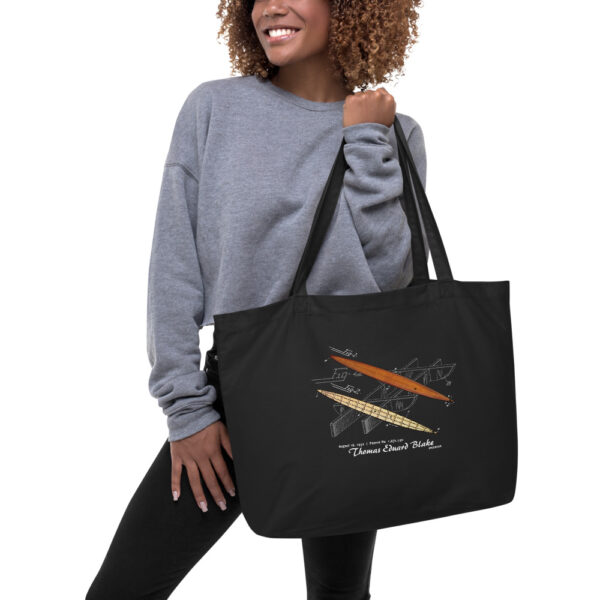
Combine eco-conscious comfort with your personal style—showcase your passion on this spacious 100% certified organic cotton twill tote bag. The sturdy fabric, dual straps, and flat bottom gives this tote plenty of room for a whole lot of groceries, toys, sports gear, games, books, and even a matching t-shirt to make a thoughtful combo gift for someone special. Available in oyster or black, with PatentWear’s original Leash Patent design printed on one side.
• 100% certified organic cotton 3/1 twill
• Fabric weight: 8 oz/yd² (272 g/m²)
• Dimensions: 20″ x 14″ x 5″
• Capacity: 6 US gal (23 l)
• Weight limit: 30 lbs (13.6 kg)
• 1″ wide dual straps, 25″ long
• Open main compartment, flat bottom
• Easy care: hand or machine wash cold, inside-out, non-chlorine bleach only, no fabric softeners, tumble dry low or hang dry for longest life
The Story
Pat O’Neill, son of the late legendary surfer and wetsuit guru Jack O’Neill, is credited with the invention of the surf leash, though he never patented it. In 1971 Pat used a surgical cord to attach his leg to his surfboard via a suction cup. When he used it during a competition in Malibu, Pat was disqualified for wearing the then-unsanctioned leash.
The leash concept was slow to be accepted by old-school watermen. The prevailing philosophy was, if you lost your board in a wipeout, you swam for it and waited your turn to get back in the lineup. Early surf leashes were called “kook cords” by a surfing community whose unwritten yet shared attitude was that a surfer should pay for his or her mistakes by swimming.
Oddly enough, Jack O’Neill became one of the first victims of the leash when he lost an eye from a powerful snap-back while surfing the Hook in Santa Cruz, California. Jack’s distinctive bearded mug and his piratical eye patch have now become one of today’s most iconic logos, recognized worldwide as the O’Neill surf brand of clothes, gear, and accessories.
The advancement from dangerously elastic surgical tubing, to bungee cord, and then today’s urethane cord attached via Velcro to the ankle illustrates the evolution of the surf leash. By removing the consequences of losing a board, the leash has allowed surfers to push former limits to the extreme moves of today.
Mandatory equipment for shortboarders, many longboarders still refuse to wear a leash, claiming it interferes with their ability to walk the board. Regardless of one’s opinion of the surf leash, it is here to stay.
Related products
-

-
Surfboard-Kelly Patent Tote—Large
$20.00Select options This product has multiple variants. The options may be chosen on the product page -

Blake Paddle Board Patent Tote—Large
$20.00Select options This product has multiple variants. The options may be chosen on the product page -