

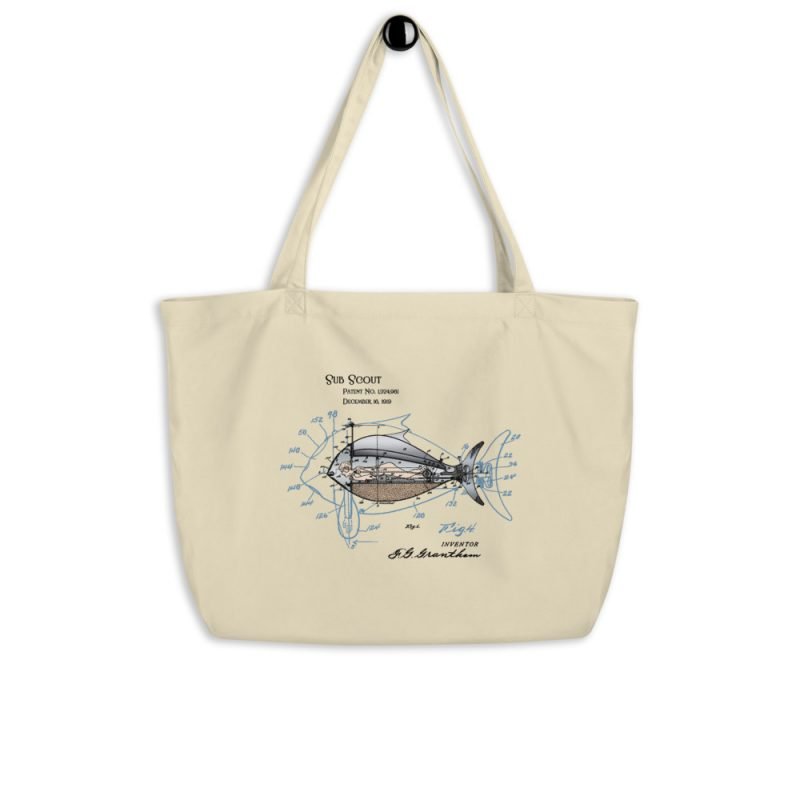
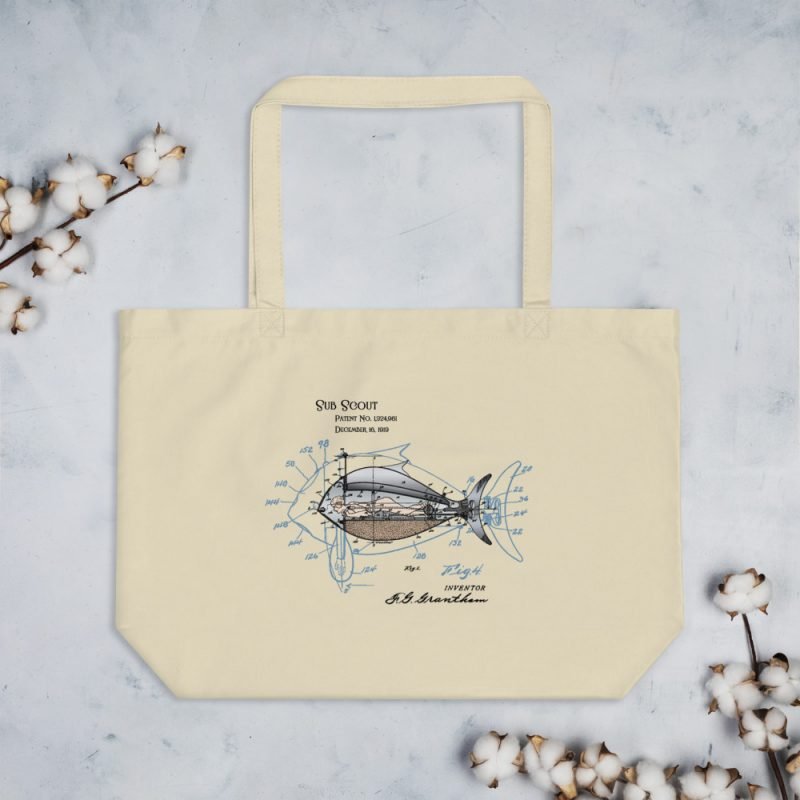
Sub Scout Patent Tote—Large
$20.00
See The Story of this design in tab, below.
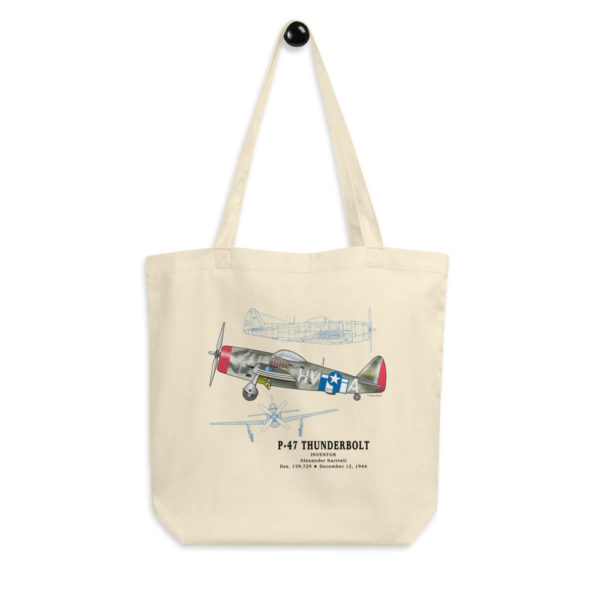
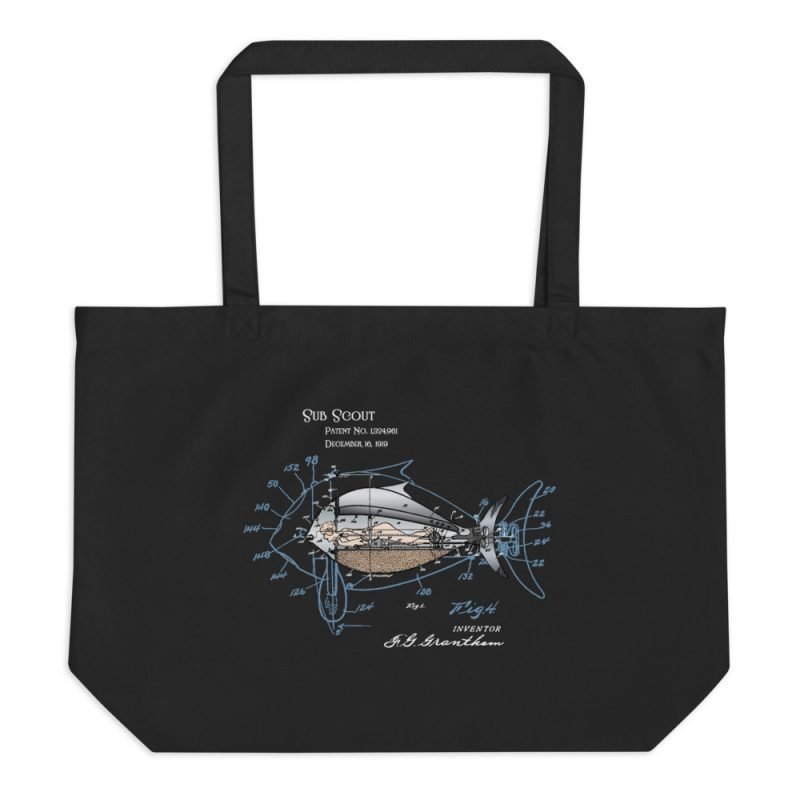
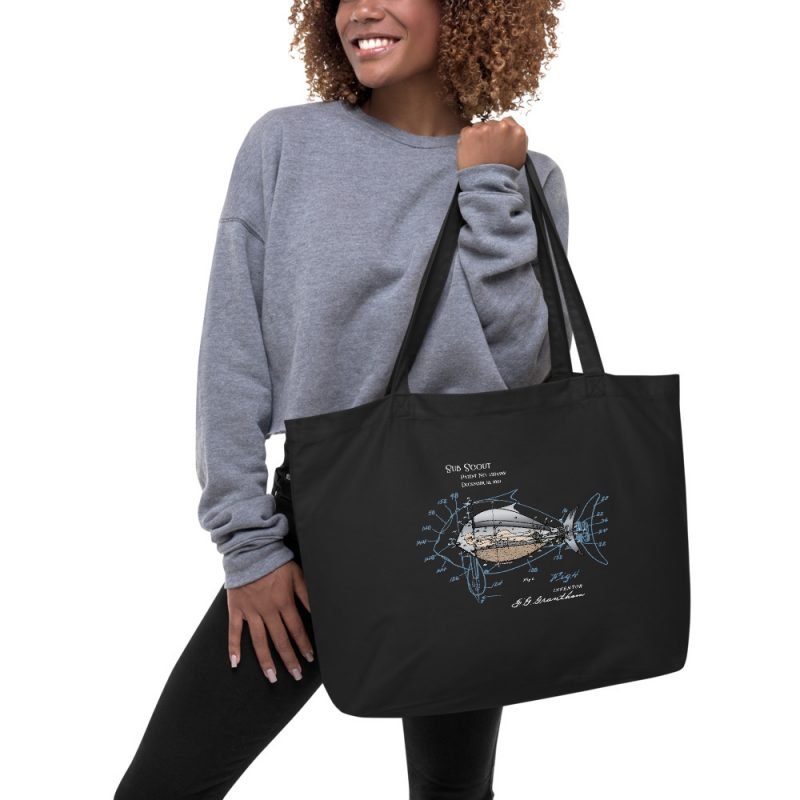
Combine eco-conscious comfort with your personal style—showcase your passion on this spacious 100% certified organic cotton twill tote bag. The sturdy fabric, dual straps, and flat bottom gives this tote plenty of room for a whole lot of groceries, toys, sports gear, games, books, and even a matching t-shirt to make a thoughtful combo gift for someone special. Available in oyster or black, with PatentWear’s original Sub Scout Patent design printed on one side.
• 100% certified organic cotton 3/1 twill
• Fabric weight: 8 oz/yd² (272 g/m²)
• Dimensions: 20″ x 14″ x 5″
• Capacity: 6 US gal (23 l)
• Weight limit: 30 lbs (13.6 kg)
• 1″ wide dual straps, 25″ long
• Open main compartment, flat bottom
• Easy care: hand or machine wash cold, inside-out, non-chlorine bleach only, no fabric softeners, tumble dry low or hang dry for longest life
The Story
The lure of ocean exploration and human command of underwater worlds is nearly as old as mankind’s imagination. From early duck hunters in Egypt’s Nile Valley—who breathed underwater through hollow papyrus reeds while stalking their prey—to modern sophisticated military submarines, the problem for humans remaining underwater has primarily been one of endurance and performance.
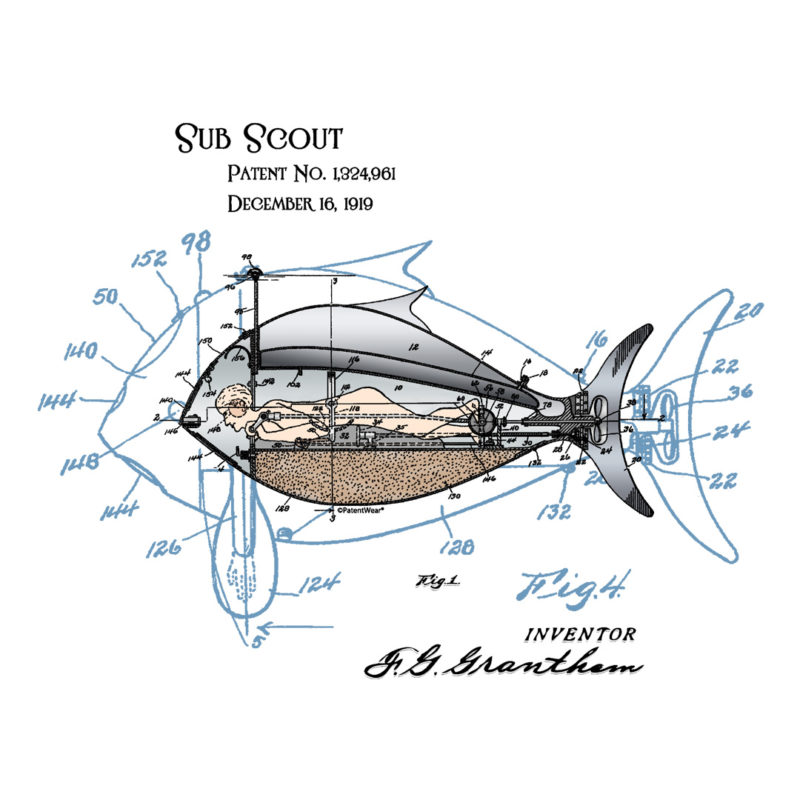
Frederick G. Grantham’s 1919 patent for “submarine scouting apparatus” depicted in PatentWear’s Sub Scout design, was for a “one-man type” of submersible vehicle, “for submarine scouting purposes” and devised with “provision for propelling and guiding the vessel by a single-person operating mechanism arranged within the vessel.” It also provided a way for the air supply within to be controlled by the pilot through an air reservoir and pump device “adapted to be operated by means of the connections to the propeller drive.”
Grantham thought of everything for his one-man sub. The design includes a compartment for the pilot that is not only water-tight, but, accommodating for the pilot’s prone position. The pilot could operate “any and all parts necessary for propelling and guiding the vessel” from the reclining position. Auxilary, or “secondary control” of the vessel’s movement is provided through flexible sleeves, whereby the pilot can use his own hands instead of the fin blades attached to the hull. The windows “enable the pilot to make observations in all directions ahead of the vessel.” The ballast system, consisting of a load of sand, was devised so that when released, the vessel’s opposite end—presumably at the pilot’s head—would “swing into more or less upwardly-inclined position”
So far, we cannot tell if this patented vessel was ever actually produced—or whether anyone found it to be of practical use. Grantham states in his patent: “…while I now deem to represent the preferred form of embodiment of the improvements, I desire to reserve the right to such changes or modifications as may fairly fall within the scope of the appended claims.” Other patents held by Grantham include a lawn mower sharpening device granted to him 36 years later, and a compact tumbler drying unit in 1945.